

- University
- Academic
- Schools/Vocational Schools
- Vocational School of Justice
- Vocational School
- Vocational School
- Department of Banking and Insurance (Turkish)
- Department of Computer Programming (Turkish)
- Department of Foreign Trade (Turkish)
- Department of Graphic Design (Turkish)
- Department of Interior Design (Turkish)
- Department of Construction Technology (Turkish)
- Department of Occupational Health and Safety (Turkish)
- Department of Media and Communication (Turkish)
- Department of Architectural Restoration (Turkish)
- Department of Radio and Tv Programming (Turkish)
- Department of Civil Aviation Cabin Services (Turkish)
- Department of Civil Aviation Transportation Management (Turkish)
- Department of Tourism and Hotel Management (Turkish)
- Department of Applied English Translation
- Vocational School Of Health Services
- Vocational School Of Health Services
- Department of Child Development (Turkish)
- Department of Physiotherapy (Turkish)
- Department of Paramedic (Turkish)
- Department of Opticianry (Turkish)
- Department of Medical Documentation and Secreteriat (Turkish)
- Department of Medical Imaging Techniques (Turkish)
- Department of Medical Laboratory Techniques (Turkish)
- Department of Elderly Care (Turkish)
- School of Applied Management Sciences
- School of Foreign Languages
- Faculties
- Faculty of Arts and Sciences
- Faculty of Fine Arts and Design
- Faculty of Law
- Faculty of Communication
- Faculty of Business
- Faculty of Engineering
- Faculty of Engineering
- Department of Computer Engineering
- Department of Biomedical Engineering
- Department of Electrical and Electronics Engineering
- Department of Industrial Engineering
- Department of Food Engineering
- Department of Genetics and Bioengineering
- Department of Aerospace Engineering
- Department of Civil Engineering
- Department of Mechanical Engineering
- Department of Mechatronics Engineering
- Department of Software Engineering
- Faculty of Health Sciences
- Medicine
- Graduate School
- Common Courses
- Schools/Vocational Schools
- Research
- Research Centers
- Library
- Smart Campus
- Technology Transfer Office
- İzmir Sciencepark
- Continuous Education Center (EKOSEM)
- Children's University
- Ethics Committee
- Teaching and Learning Center (EKOEĞİTİM)
- Psychology Application and Research Center
- Researcher Training Coordinatorship
- Research Collaborations And Innovation Coordinatorship
- Campus
- INTERNATIONAL
- Contact
- 25TH YEAR
Department of Public Relations and Advertising
HIM 140 | Course Introduction and Application Information
| Course Name |
Ethical Decision Making
|
|
Code
|
Semester
|
Theory
(hour/week) |
Application/Lab
(hour/week) |
Local Credits
|
ECTS
|
|
HIM 140
|
Spring
|
3
|
0
|
3
|
4
|
| Prerequisites |
None
|
|||||
| Course Language |
English
|
|||||
| Course Type |
Required
|
|||||
| Course Level |
First Cycle
|
|||||
| Mode of Delivery | face to face | |||||
| Teaching Methods and Techniques of the Course | DiscussionCase StudyLecture / Presentation | |||||
| National Occupation Classification | - | |||||
| Course Coordinator | - | |||||
| Course Lecturer(s) | ||||||
| Assistant(s) | - | |||||
| Course Objectives | Ethics is the study of how we ought to live well and how to live rightly. This course aims each student to have the opportunity to think deeply and systematically about the primary components of living a good human life and begin a lifelong process of reflection and self-scrutiny regarding her or his own life. |
| Learning Outcomes |
The students who succeeded in this course;
|
| Course Description | This course is designed as an introduction to moral philosophy through a number of central issues. The main aim of the course, therefore, is to introduce students with major theories, thinkers and concepts of ethics. Successful students will be able to apply these concepts and theories to controversial moral issues as well as to their personal, everyday life in a reflective manner. |
| Related Sustainable Development Goals |
|
|
|
Core Courses | |
| Major Area Courses | ||
| Supportive Courses | ||
| Media and Management Skills Courses | ||
| Transferable Skill Courses |
WEEKLY SUBJECTS AND RELATED PREPARATION STUDIES
| Week | Subjects | Related Preparation |
| 1 | Introduction | |
| 2 | Utilitarianism (1) | Dell'Olio vd., Ch. 5 pp.174-181 |
| 3 | Utilitarianism (2) | Dell'Olio vd., Ch 5 pp. 181-188 |
| 4 | Deontology (1) | Dell'Olio vd., Ch 6 pp. 224-253 |
| 5 | Deontology (2) | Dell'Olio vd., Ch 6 pp. 240-253 |
| 6 | Virtue ethics (1) | Dell'Olio vd., Ch 7 s. 298-319 |
| 7 | Virtue ethics (2) | Dell'Olio vd., Ch 7 s. 298-319 (cont.) |
| 8 | Midterm Exam | |
| 9 | Controversy 1 | “Friendship, Democracy, and Citizen Journalism” in Digital Media Ethics; “Media ownership,, autonomy and democracy in a corporate age” in Routledge Handbook of Mass Media Ethics. |
| 10 | Controversy 2 | “The eroding boundaries between news and entertainment and what they mean for Democratic politics” in Routledge Handbook of Mass Media Ethics; “How we comment on web journalism: A case study on Dialogue found in news articles” in Ethics of Emerging Media. |
| 11 | Controversy 3 | “Feminist Media Ethics” in Routledge Handbook of Mass Media Ethics; “Still more ethical issues: Digital Sex and Games” in Digital Media Ethics |
| 12 | In class writing assignment | Details to be announced |
| 13 | Controversy 4 | “Coercion, consent and the struggle for social media” in Routledge Handbook of Mass Media Ethics; “Holocaust denial, cyberspace, and the question of moral convergence” in Ethics of Emerging Media. |
| 14 | Film | TBA |
| 15 | Review of the Semester | |
| 16 | Final exam |
| Course Notes/Textbooks | 1. Digital Media Ethics, Charles Ess ed., 2 nd ed. Polity Press 2014. ISBN-10: 0745656064 2. Routledge Handbook of Mass Media Ethics, Lee Wilkins and Clifford G. Christians, 2 nd ed, Routledge 2020. ISBN- 10: 9780805861914 3. Ethics of Emerging Media, Bruce Dushel and Kathleen German eds., Continuum International 2011 ISBN- 10: 0230367038 4. Introduction to Ethics: A Reader, eds. Dell'olio and Simon, Rowman and Littlefield (2010) ISBN: 978 0 7425 6357 5 |
| Suggested Readings/Materials | Lectures notes and handouts that explain fundamental theories and concepts of morality will be provided. |
EVALUATION SYSTEM
| Semester Activities | Number | Weigthing |
| Participation | ||
| Laboratory / Application | ||
| Field Work | ||
| Quizzes / Studio Critiques | ||
| Portfolio | ||
| Homework / Assignments |
1
|
35
|
| Presentation / Jury |
1
|
25
|
| Project | ||
| Seminar / Workshop | ||
| Oral Exams | ||
| Midterm |
1
|
40
|
| Final Exam | ||
| Total |
| Weighting of Semester Activities on the Final Grade |
3
|
100
|
| Weighting of End-of-Semester Activities on the Final Grade | ||
| Total |
ECTS / WORKLOAD TABLE
| Semester Activities | Number | Duration (Hours) | Workload |
|---|---|---|---|
| Theoretical Course Hours (Including exam week: 16 x total hours) |
16
|
3
|
48
|
| Laboratory / Application Hours |
16
|
0
|
|
| Study Hours Out of Class |
15
|
1
|
15
|
| Field Work |
0
|
||
| Quizzes / Studio Critiques |
0
|
||
| Portfolio |
0
|
||
| Homework / Assignments |
1
|
20
|
20
|
| Presentation / Jury |
1
|
12
|
12
|
| Project |
0
|
||
| Seminar / Workshop |
0
|
||
| Oral Exam |
0
|
||
| Midterms |
1
|
25
|
25
|
| Final Exam |
0
|
||
| Total |
120
|
COURSE LEARNING OUTCOMES AND PROGRAM QUALIFICATIONS RELATIONSHIP
|
#
|
Program Competencies/Outcomes |
* Contribution Level
|
|||||
|
1
|
2
|
3
|
4
|
5
|
|||
| 1 |
To be able to critically interpret theories, concepts, methods, instruments and ideas that form the basis of Public Relations and Advertising field. |
X
|
-
|
-
|
-
|
-
|
|
| 2 |
To be able to collect and use necessary data to produce content in the field of Public Relations and Advertising with scientific methods. |
-
|
-
|
-
|
-
|
-
|
|
| 3 |
To be able to use theoretical knowledge gained in the field of Public Relations and Advertising in practice. |
-
|
-
|
-
|
-
|
-
|
|
| 4 |
To be able to use analytical thinking skills in the field of Public Relations and Advertising. |
-
|
-
|
-
|
-
|
-
|
|
| 5 |
To be able to convey creative ideas and solution suggestions supported by scientific data in written and oral form to stakeholders. |
-
|
-
|
-
|
-
|
-
|
|
| 6 |
To be able to take responsibility as individual and group members to solve problems encountered in the practice of Public Relations and Advertising field. |
-
|
-
|
-
|
-
|
-
|
|
| 7 |
To be able to develop solutions that favor public good and raise awareness by having knowledge about regional, national and global issues and problems. |
-
|
-
|
X
|
-
|
-
|
|
| 8 |
To be able to relate the basic knowledge of other disciplines supporting the field of Public Relations and Advertising with his/her own field of expertise. |
-
|
-
|
-
|
-
|
-
|
|
| 9 |
To be able to use the knowledge, skills and competencies acquired by following regulations, innovations, changes, current developments, and occupational health and safety practices closely in the field of Public Relations and Advertising; in a lifelong manner and for individual and social purposes. |
-
|
-
|
-
|
-
|
-
|
|
| 10 |
To be able to collect, interpret and share data by considering social, scientific and professional ethical values in the field of Public Relations and Advertising. |
-
|
-
|
-
|
-
|
-
|
|
| 11 |
To be able to collect data in the areas of Public Relations and Advertising and communicate with colleagues in a foreign language ("European Language Portfolio Global Scale", Level B1) |
-
|
-
|
-
|
-
|
-
|
|
| 12 |
To be able to speak a second foreign at a medium level of fluency efficiently. |
-
|
-
|
-
|
-
|
-
|
|
| 13 |
To be able to relate the knowledge accumulated throughout the human history to their field of expertise. |
-
|
-
|
-
|
-
|
X
|
|
*1 Lowest, 2 Low, 3 Average, 4 High, 5 Highest




NEWSALL NEWS


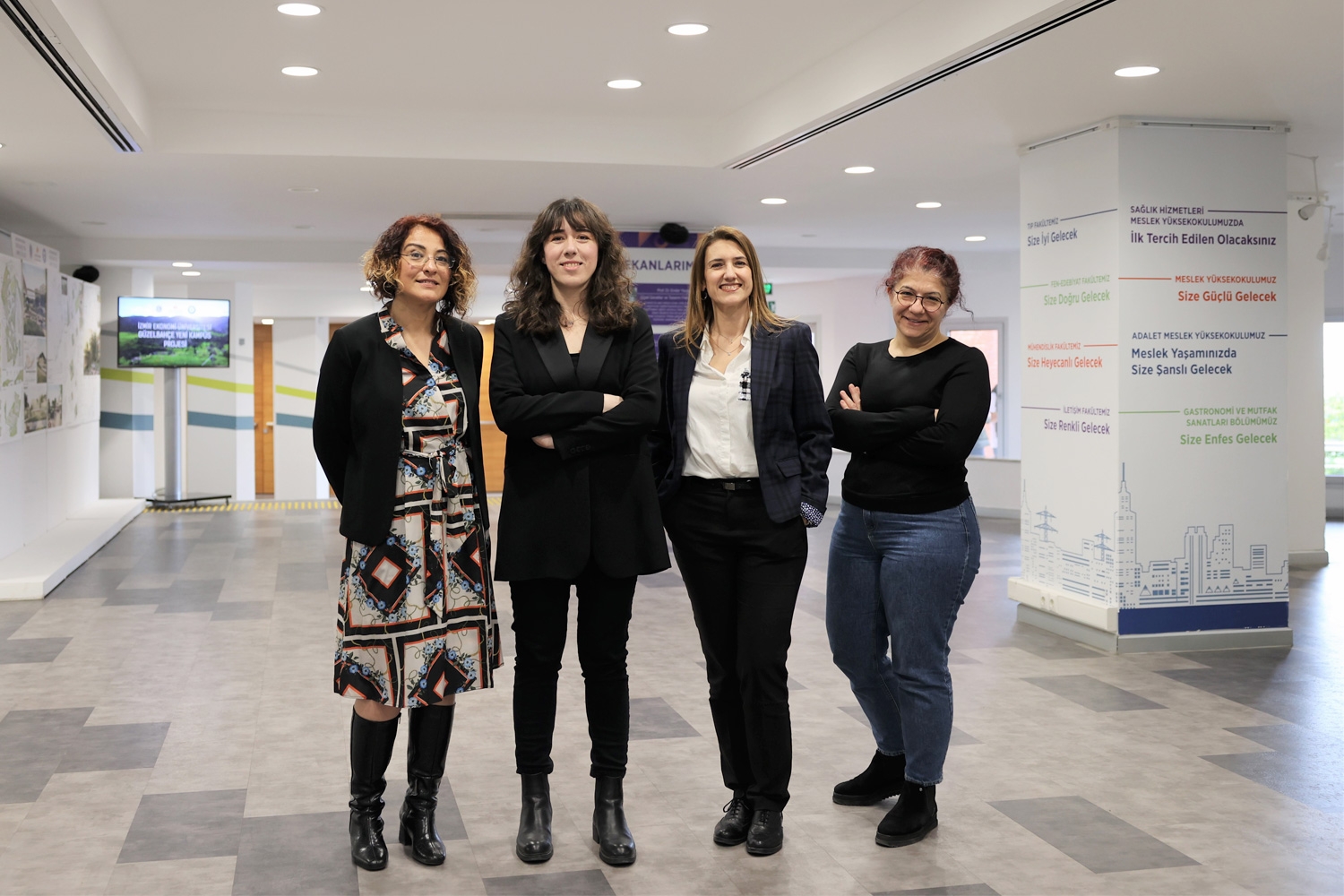
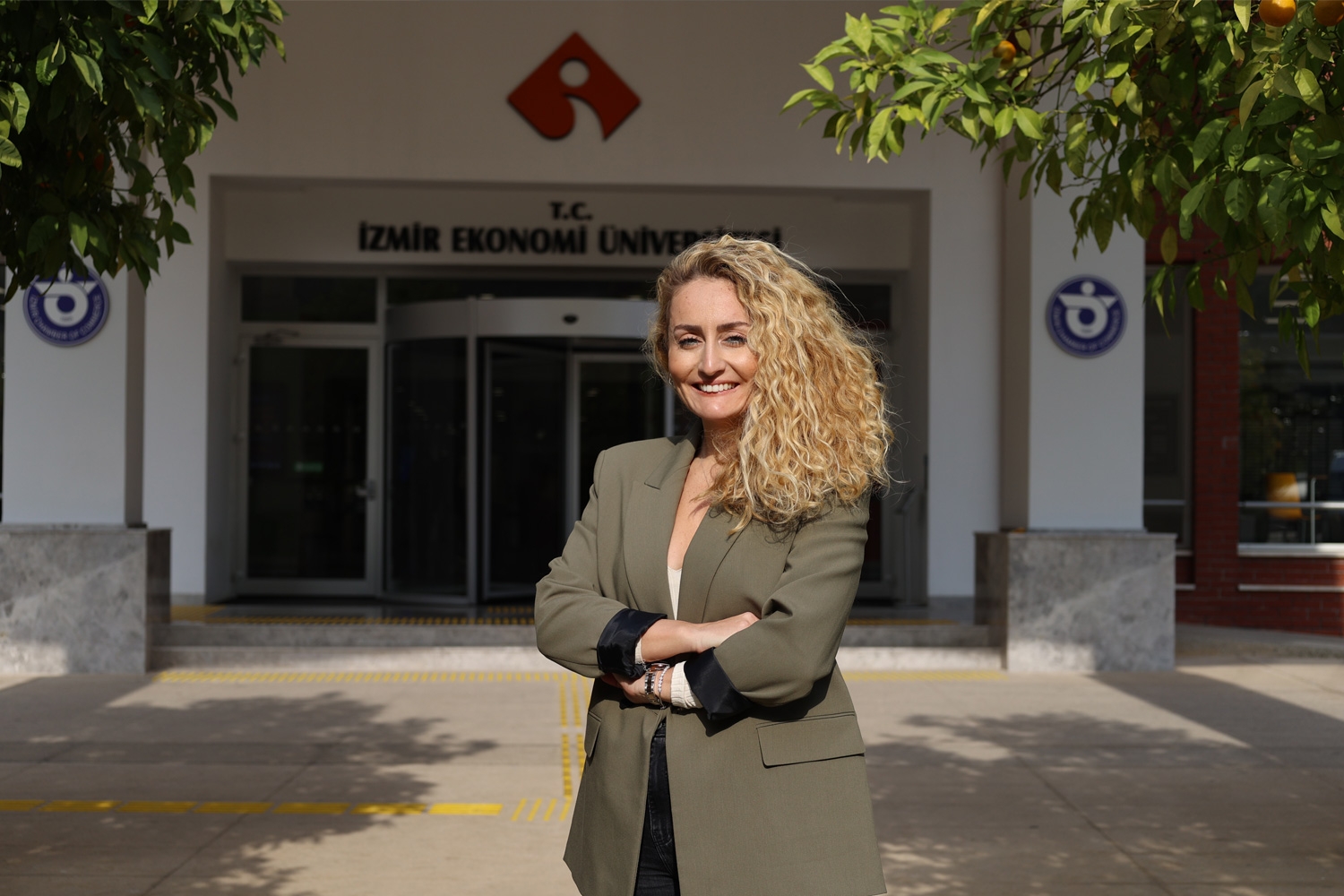

IZMIR UNIVERSITY OF ECONOMICS GÜZELBAHÇE CAMPUS
DetailsGLOBAL CAREER
As Izmir University of Economics transforms into a world-class university, it also raises successful young people with global competence.
More..CONTRIBUTION TO SCIENCE
Izmir University of Economics produces qualified knowledge and competent technologies.
More..VALUING PEOPLE
Izmir University of Economics sees producing social benefit as its reason for existence.
More..
You are one step ahead with your graduate education at Izmir University of Economics.