

- University
- Academic
- Schools/Vocational Schools
- Vocational School of Justice
- Vocational School
- Vocational School
- Department of Banking and Insurance (Turkish)
- Department of Computer Programming (Turkish)
- Department of Foreign Trade (Turkish)
- Department of Graphic Design (Turkish)
- Department of Interior Design (Turkish)
- Department of Construction Technology (Turkish)
- Department of Occupational Health and Safety (Turkish)
- Department of Media and Communication (Turkish)
- Department of Architectural Restoration (Turkish)
- Department of Radio and Tv Programming (Turkish)
- Department of Civil Aviation Cabin Services (Turkish)
- Department of Civil Aviation Transportation Management (Turkish)
- Department of Tourism and Hotel Management (Turkish)
- Department of Applied English Translation
- Vocational School Of Health Services
- Vocational School Of Health Services
- Department of Child Development (Turkish)
- Department of Physiotherapy (Turkish)
- Department of Paramedic (Turkish)
- Department of Opticianry (Turkish)
- Department of Medical Documentation and Secreteriat (Turkish)
- Department of Medical Imaging Techniques (Turkish)
- Department of Medical Laboratory Techniques (Turkish)
- Department of Elderly Care (Turkish)
- School of Applied Management Sciences
- School of Foreign Languages
- Faculties
- Faculty of Arts and Sciences
- Faculty of Fine Arts and Design
- Faculty of Law
- Faculty of Communication
- Faculty of Business
- Faculty of Engineering
- Faculty of Engineering
- Department of Computer Engineering
- Department of Biomedical Engineering
- Department of Electrical and Electronics Engineering
- Department of Industrial Engineering
- Department of Food Engineering
- Department of Genetics and Bioengineering
- Department of Aerospace Engineering
- Department of Civil Engineering
- Department of Mechanical Engineering
- Department of Mechatronics Engineering
- Department of Software Engineering
- Faculty of Health Sciences
- Medicine
- Graduate School
- Common Courses
- Schools/Vocational Schools
- Research
- Research Centers
- Library
- Smart Campus
- Technology Transfer Office
- İzmir Sciencepark
- Continuous Education Center (EKOSEM)
- Children's University
- Ethics Committee
- Teaching and Learning Center (EKOEĞİTİM)
- Psychology Application and Research Center
- Researcher Training Coordinatorship
- Research Collaborations And Innovation Coordinatorship
- Campus
- INTERNATIONAL
- Contact
- 25TH YEAR
Department of Public Relations and Advertising
ENG 101 | Course Introduction and Application Information
| Course Name |
Academic Skills in English I
|
|
Code
|
Semester
|
Theory
(hour/week) |
Application/Lab
(hour/week) |
Local Credits
|
ECTS
|
|
ENG 101
|
Fall
|
2
|
2
|
3
|
3
|
| Prerequisites |
None
|
|||||
| Course Language |
English
|
|||||
| Course Type |
Required
|
|||||
| Course Level |
First Cycle
|
|||||
| Mode of Delivery | - | |||||
| Teaching Methods and Techniques of the Course | DiscussionGroup WorkQ&ACritical feedbackLecture / Presentation | |||||
| National Occupation Classification | - | |||||
| Course Coordinator | ||||||
| Course Lecturer(s) |
|
|||||
| Assistant(s) | - | |||||
| Course Objectives | This course is designed to develop the academic language skills undergraduate students need to succeed across their degree programmes. The course equips students to read critically, write structured academic arguments, synthesise evidence from multiple sources, and engage with complex ideas in English. By grounding skills development in professionally relevant and intellectually challenging source texts, the course prepares students not only for ENG 102 but for the full range of academic communication demands they will encounter throughout their studies and careers. |
| Learning Outcomes |
The students who succeeded in this course;
|
| Course Description | The course develops the academic skills in English required for undergraduate study at B2 CEFR level. Through a flipped learning model combining pre-class digital modules with face-to-face sessions, students practise summarising, paraphrasing, synthesising, and arguing from a range of authentic academic sources drawn from social science, philosophy, media studies, and science communication. Students produce structured academic paragraphs and an essay, curate a learning portfolio, and develop the critical reading, responsible AI use, and reflective writing skills needed for ENG 102 and beyond. |
| Related Sustainable Development Goals |
|
|
|
Core Courses | |
| Major Area Courses | ||
| Supportive Courses | ||
| Media and Management Skills Courses | ||
| Transferable Skill Courses |
WEEKLY SUBJECTS AND RELATED PREPARATION STUDIES
| Week | Subjects | Related Preparation |
| 1 | Introduction to Course | No required reading. Complete Flipped Module 1 before Week 2 Session 1. |
| 2 | The Science of Belonging — Walton and Cohen (2011): What does the research say about belonging at university? Reading, annotating, and summarising an academic source. | Walton, G. M., and Cohen, G. L. (2011). A brief social-belonging intervention improves academic and health outcomes of minority students. Science, 331(6023), 1447–1451. |
| 3 | Future of Work and iGen — Twenge (2017): Sceptical reading and paraphrasing. What does the evidence actually show? | Twenge, J. M. (2017). Have smartphones destroyed a generation? The Atlantic. |
| 4 | Baloney Detection — Sagan (1996): Tools for evaluating any claim. Credibility, evidence, and the fine art of critical reading. | Sagan, C. (1996). The fine art of baloney detection. In The demon-haunted world (pp. 209–217). Ballantine Books. |
| 5 | Academic Integrity — Pecorari (2003): Patchwriting, paraphrase, and the difference between using sources and misrepresenting them. | Pecorari, D. (2003). Good and original: Plagiarism and patchwriting in academic second-language writing. Journal of Second Language Writing, 12(4), 317–345. Excerpt provided by instructor. |
| 6 | Grit and Perseverance — Duckworth et al. (2007) and WEF (2023): The CEE paragraph. Claim, evidence, explanation using two sources. | Duckworth, A. L., Peterson, C., Matthews, M. D., and Kelly, D. R. (2007). Grit: Perseverance and passion for long-term goals. Journal of Personality and Social Psychology, 92(6), 1087–1101. |
| 7 | Statistics and Synthesis — Huff (1954) and IPCC (2023): Reading data critically. Synthesis across two sources from different domains. | Huff, D. (1954). How to lie with statistics. Norton. Chapter excerpt provided by instructor. IPCC (2023). Climate Change 2023: Synthesis Report. Summary for Policymakers. |
| 8 | Midterm Week | No required materials. Review course sources from Weeks 2–8. |
| 9 | One Story Is Never Enough — Adichie (2009): Counterargument and rebuttal. The danger of a single narrative in academic argument. | Adichie, C. N. (2009). The danger of a single story [TED Talk transcript]. TED2009. |
| 10 | Ethics and the Essay — Singer (1972): Thesis statements and essay structure. Philosophical argument and its academic form. | Singer, P. (1972). Famine, affluence, and morality. Philosophy and Public Affairs, 1(3), 229–243. |
| 11 | Can a Machine Be Creative? — Robinson (2006) and Sagan (1996) reused: AI in academic writing. Responsible use and baloney detection applied to AI output. | Robinson, K. (2006). Do schools kill creativity? [TED Talk transcript]. TED2006. |
| 12 | Revision is Writing: Three-level revision framework. Peer review workshop. Final essay introduction drafted in class. | No new source. Students bring their own writing from Weeks 6–11. |
| 13 | Portfolio Week — Moon (1999): Reflective writing. Portfolio curation. Vision statement and final assessment preparation. | Moon, J. (1999). Reflection in learning and professional development, Chapter 1 excerpt. Kogan Page. |
| 14 | From Student to Professional: Course synthesis. Student source presentations. Final essay submission guidance. Course close. | No required reading. Students bring one chosen course source and their completed e-portfolio. |
| 15 | Semester Review | |
| 16 | Final Exams |
| Course Notes/Textbooks | SFL Materials |
| Suggested Readings/Materials | Supplementary material to be prepared when necessary by the course instructors
|
EVALUATION SYSTEM
| Semester Activities | Number | Weigthing |
| Participation |
1
|
10
|
| Laboratory / Application | ||
| Field Work | ||
| Quizzes / Studio Critiques |
1
|
10
|
| Portfolio | ||
| Homework / Assignments |
1
|
25
|
| Presentation / Jury | ||
| Project |
1
|
25
|
| Seminar / Workshop | ||
| Oral Exams | ||
| Midterm |
1
|
30
|
| Final Exam | ||
| Total |
| Weighting of Semester Activities on the Final Grade |
5
|
100
|
| Weighting of End-of-Semester Activities on the Final Grade | ||
| Total |
ECTS / WORKLOAD TABLE
| Semester Activities | Number | Duration (Hours) | Workload |
|---|---|---|---|
| Theoretical Course Hours (Including exam week: 16 x total hours) |
16
|
2
|
32
|
| Laboratory / Application Hours |
16
|
2
|
32
|
| Study Hours Out of Class |
14
|
1
|
14
|
| Field Work |
0
|
||
| Quizzes / Studio Critiques |
1
|
1
|
1
|
| Portfolio |
1
|
12
|
12
|
| Homework / Assignments |
12
|
1
|
12
|
| Presentation / Jury |
0
|
||
| Project |
0
|
||
| Seminar / Workshop |
0
|
||
| Oral Exam |
0
|
||
| Midterms |
1
|
3
|
3
|
| Final Exam |
0
|
||
| Total |
106
|
COURSE LEARNING OUTCOMES AND PROGRAM QUALIFICATIONS RELATIONSHIP
|
#
|
Program Competencies/Outcomes |
* Contribution Level
|
|||||
|
1
|
2
|
3
|
4
|
5
|
|||
| 1 |
To be able to critically interpret theories, concepts, methods, instruments and ideas that form the basis of Public Relations and Advertising field. |
-
|
-
|
-
|
-
|
-
|
|
| 2 |
To be able to collect and use necessary data to produce content in the field of Public Relations and Advertising with scientific methods. |
-
|
-
|
-
|
-
|
X
|
|
| 3 |
To be able to use theoretical knowledge gained in the field of Public Relations and Advertising in practice. |
-
|
-
|
X
|
-
|
-
|
|
| 4 |
To be able to use analytical thinking skills in the field of Public Relations and Advertising. |
-
|
X
|
-
|
-
|
-
|
|
| 5 |
To be able to convey creative ideas and solution suggestions supported by scientific data in written and oral form to stakeholders. |
-
|
-
|
-
|
X
|
-
|
|
| 6 |
To be able to take responsibility as individual and group members to solve problems encountered in the practice of Public Relations and Advertising field. |
-
|
-
|
X
|
-
|
-
|
|
| 7 |
To be able to develop solutions that favor public good and raise awareness by having knowledge about regional, national and global issues and problems. |
-
|
-
|
-
|
X
|
-
|
|
| 8 |
To be able to relate the basic knowledge of other disciplines supporting the field of Public Relations and Advertising with his/her own field of expertise. |
-
|
X
|
-
|
-
|
-
|
|
| 9 |
To be able to use the knowledge, skills and competencies acquired by following regulations, innovations, changes, current developments, and occupational health and safety practices closely in the field of Public Relations and Advertising; in a lifelong manner and for individual and social purposes. |
-
|
X
|
-
|
-
|
-
|
|
| 10 |
To be able to collect, interpret and share data by considering social, scientific and professional ethical values in the field of Public Relations and Advertising. |
-
|
-
|
-
|
-
|
X
|
|
| 11 |
To be able to collect data in the areas of Public Relations and Advertising and communicate with colleagues in a foreign language ("European Language Portfolio Global Scale", Level B1) |
-
|
-
|
-
|
-
|
-
|
|
| 12 |
To be able to speak a second foreign at a medium level of fluency efficiently. |
-
|
-
|
-
|
-
|
-
|
|
| 13 |
To be able to relate the knowledge accumulated throughout the human history to their field of expertise. |
-
|
-
|
-
|
-
|
X
|
|
*1 Lowest, 2 Low, 3 Average, 4 High, 5 Highest




NEWSALL NEWS


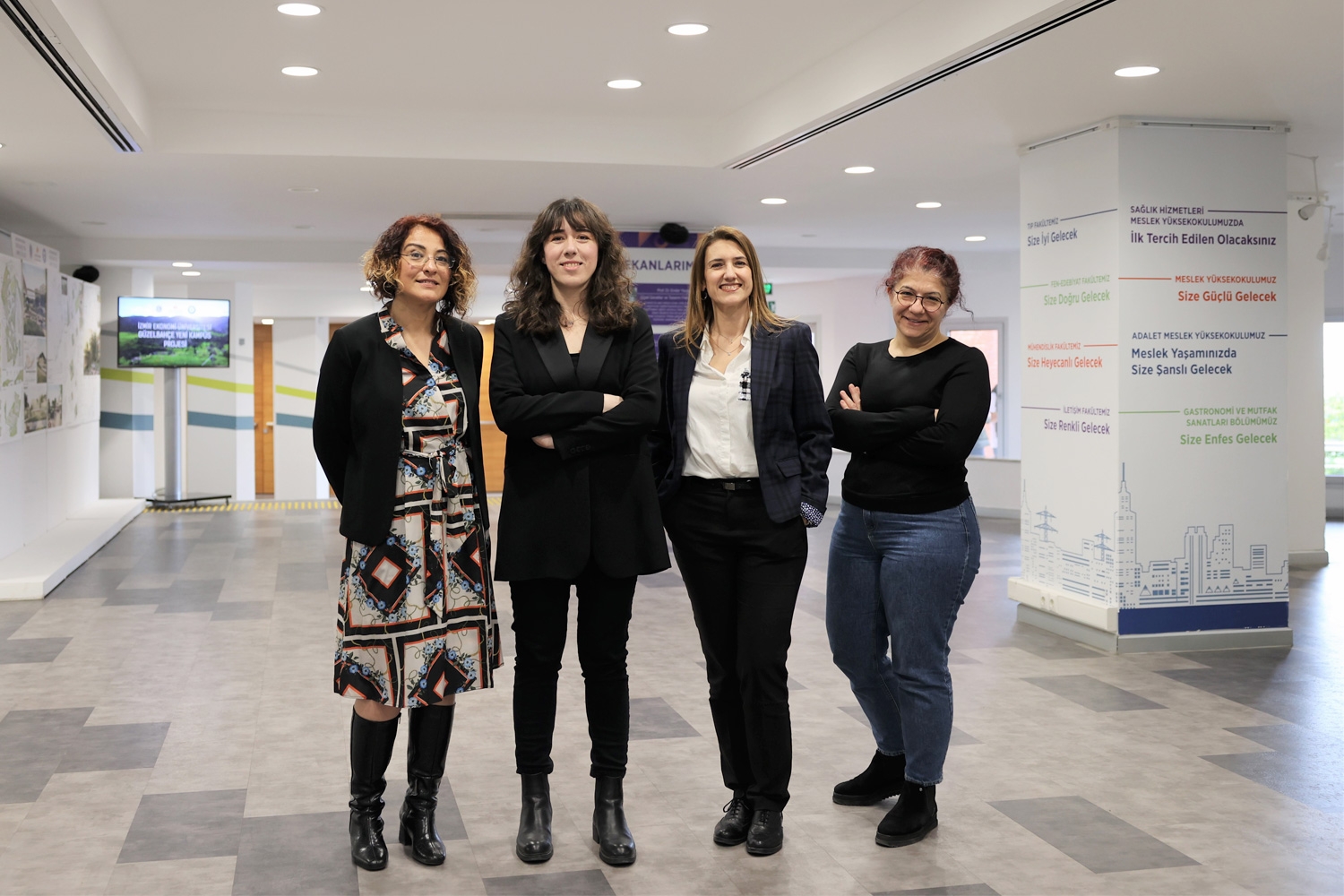
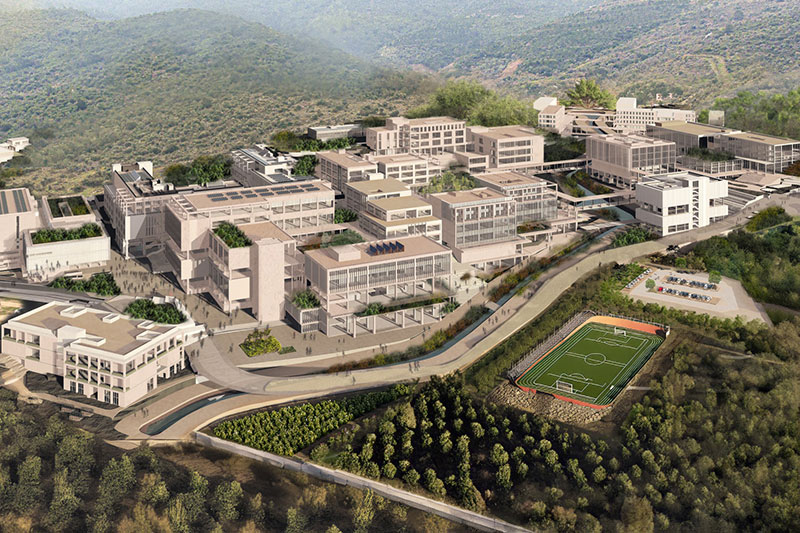
IZMIR UNIVERSITY OF ECONOMICS GÜZELBAHÇE CAMPUS
DetailsGLOBAL CAREER
As Izmir University of Economics transforms into a world-class university, it also raises successful young people with global competence.
More..CONTRIBUTION TO SCIENCE
Izmir University of Economics produces qualified knowledge and competent technologies.
More..VALUING PEOPLE
Izmir University of Economics sees producing social benefit as its reason for existence.
More..
You are one step ahead with your graduate education at Izmir University of Economics.